
From Friction to Freedom:
Why Phone-as-Key Is the 2026 Standard for Office Access Control Systems
You know that moment when a new tenant walks into your building for the first time and their face lights up because the door just… opens with their phone?
That little “wow” moment? It’s not fluff anymore. In 2026, it’s becoming the baseline. Tenants, especially the ones signing the bigger checks are choosing spaces that feel modern, effortless, and secure. And nothing screams “dated” faster than handing over a clunky set of metal keys or plastic fobs on move-in day.
If you’re still managing commercial properties the old-school way, you’re not just dealing with keys. You’re quietly handing your competitors a retention advantage.
Let’s talk about why phone-as-key has moved from “nice-to-have” to the new retention standard for office access control systems.
The Daily Friction Nobody Wants to Admit
Picture this: It’s 7:45 a.m. on a Monday. Your building manager is already fielding three calls – one employee locked out after forgetting their fob, another contractor who needs escorted to the 12th floor, and a tenant complaining that their cleaning crew can’t get in again.
Sound familiar?
Traditional keys and fobs create friction every single day in commercial offices. Employees lose them. Contractors copy them. Tenants move on and “forget” to return them. And every time that happens, you’re looking at another rekey, another service call, and another ding to your reputation.
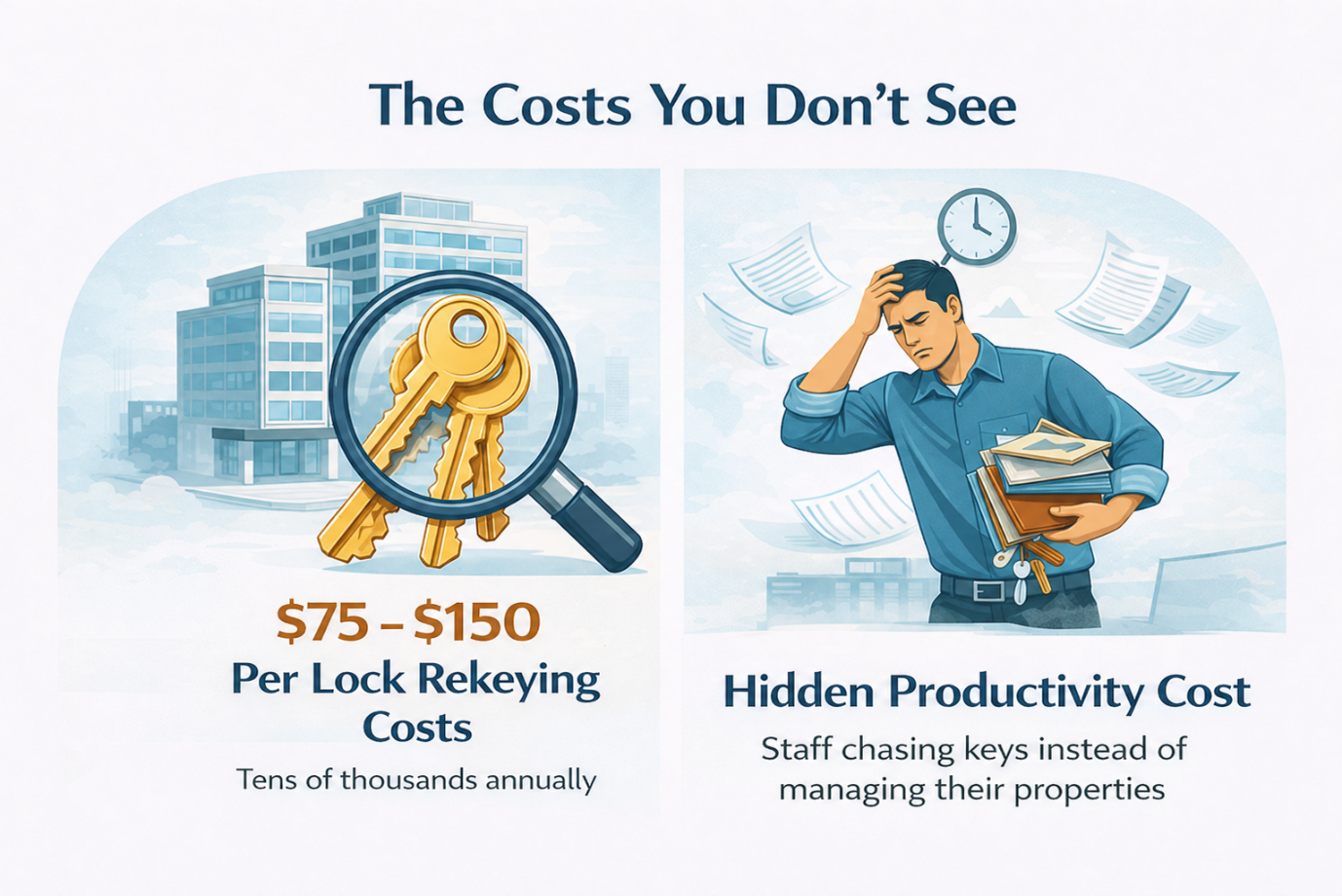
Here’s the number that hits hard: Commercial rekeying still runs $75–$150 per lock on average (and that’s before after-hours or emergency fees). In a mid-size office building with normal tenant turnover, that adds up fast – often tens of thousands of dollars a year that never show up as one clean line item on your P&L.
And that’s before you factor in the hidden productivity cost when staff are chasing keys instead of actually managing the building.
Why Tenants Are Voting with Their Feet
Today’s office tenants aren’t just looking for square footage. They want spaces that work the way their lives already do, on their phones.
They expect to:
- Tap their phone to get into the lobby, elevator, or their suite.
- Grant temporary access to a guest, cleaner, or delivery person without calling the front desk.
- Know that the system is secure and auditable (especially after everything we’ve seen in the last few years).
Properties that deliver that seamless experience are seeing stronger lease renewals and easier leasing velocity. The ones that don’t? They’re starting to feel it in longer vacancy periods and more aggressive concessions.
Did you know?
Mobile credential adoption in commercial real estate is accelerating fast with 2025–2026 forecasts showing double-digit growth in keyless entry systems as businesses prioritize touchless, convenient access (Honeywell LenelS2 Access Control Trends 2025).
The Security Myth (and the Reality)
A lot of owners still worry that “phone-based” means less secure. In reality, the opposite is true when it’s done right.
With the right commercial keyless entry system:
- You get stronger identity verification (biometrics + encrypted credentials).
- Instant revocation, no more wondering if a former tenant still has a working key.
- Full audit trails that tell you exactly who went where and when.
- Time-limited access for contractors and visitors that expires automatically.
No more master key nightmares. No more “we think we got all the copies back” uncertainty.
How iLOQ Makes Phone-as-Key Actually Practical for Offices
This is where iLOQ stands out from the crowd of “smart lock” options.
Their battery-free smart locks use energy harvested right at the moment of use – from the motion of the key or the NFC signal from a smartphone. No batteries to replace. No wiring headaches. No surprise maintenance tickets every few years.
For property teams, the cloud-based digital access management platform means you can issue, update, or revoke credentials across the entire building (or portfolio) in seconds from your laptop or phone. Tenants love the simplicity. Your operations team loves the control. And your bottom line loves the predictable lower costs.
Whether it’s a single-tenant corporate headquarters or a multi-tenant flex office building, iLOQ scales cleanly without adding administrative burden.
The Retention Play Most Owners Are Missing
Here’s the part that really gets interesting: in a competitive office market, tenants have choices. The buildings that feel effortless and modern are the ones they renew with and refer their network to.
Phone-as-key isn’t just a security upgrade. It’s a retention engine.
It removes daily friction for employees and visitors. It gives you rock-solid control and auditability. It cuts the endless cycle of rekeys, lockouts, and key management drama.
And when everything just works, your property stops being “just another office building” and starts feeling like the obvious choice.
Ready to Make the Switch?
If you’re tired of the same old key-related headaches eating into your time and your NOI, you’re not alone. A growing number of commercial property owners and operators are making the move to modern smart locks for office buildings and they’re not looking back.
At Access Pro, we are authorized U.S. representative for iLOQ and specialize in deploying iLOQ across commercial and multifamily properties. We’ll walk you through exactly what your current key system is costing you and show you how a commercial keyless entry system can deliver better security, happier tenants, and lower long-term costs.
The 2026 retention standard is here. The only question left is whether your building is going to set it… or chase it.
Drop us a note or give us a call 763-343-9967. We’ll run the numbers together and map out what the right office access control system could look like for your properties. No pressure, just real talk from people who actually get what you’re dealing with every day.
Your tenants (and your NOI) will thank you.
Ready to see what phone-as-key can do for your office buildings?
Reach out to Access Pro today. We’re real people who’ve helped operators just like you make the switch.